Opacity In CapCut Images – Easy Guide for Beginners in 2026
Learn how to adjust opacity in CapCut images easily. This guide explains steps, tips, and fixes to create smooth and professional visuals.
Introduction to Opacity In CapCut Images
One such tiny tool is the Opacity in CapCut images which makes a huge difference. The only thing that people can do when they begin video editing is cutting clips, adding music, or text. However, in reality, videos are either flat or harsh without the sense of the concept of opacity. The Opacity is merely the regulator of the transparency of an image on your video. You may easily blur images by adjusting it correctly, make a soft background, or simply add logos without disturbing the main image. This is the reason why it is useful to learn the aspect of the opaqueness in CapCut images, not only to a beginner but to an ordinary content producer.
As we are aware, CapCut is famous due to its simplicity and ease of use. It has many users who consume it in the form of short videos, reels, and social media content. Using the assistance of the opacity, videos can be superimposed to images without obscuring primary images. For example, adding a light overlay image can improve mood, while lowering logo opacity makes branding feel natural. These small edits improve quality without much effort. Tools like CapCut Pro also give more smooth control, which helps when you want clean and professional-looking results.
Most people don’t realize that opacity is not about brightness or color. It is about balance. If opacity is too high, the image looks heavy. If it is too low, the image almost disappears. Finding the right level takes a little practice, but CapCut makes it easy with its slider option. Many creators prefer using CapCut Pro Download because it gives better control and smoother previews while adjusting opacity. This is helpful, especially when editing longer videos.
In simple words, opacity helps your images sit comfortably inside your video. It allows you to guide the viewer’s eyes without forcing attention. Once you understand how opacity in CapCut images works, your edits start to look cleaner and more thoughtful. Well, that’s where good editing actually begins.
What Is Opacity In CapCut Images
The opacity in CapCut images merely refers to the transparency or solidity of an image in terms of appearance when it is placed on a video. When the opacities are at 100 then the picture appears completely solid and transparent. By pushing it down, the picture will be made light and you will be able to see what will be behind the picture. To be honest, this notion is technical on the one hand, and on the other hand, this concept is extremely natural. Think about a glass window. A clear glass is transparent and reveals everything whereas a frosted glass conceals the information. Opacity works in the same way.
In CapCut, opacity in images helps creators blend photos, logos, and overlays smoothly. Many beginners think opacity is linked with brightness or contrast, but it is not. Brightness changes light, while opacity changes visibility. This small difference can change the whole look of your video. When you use opacity in CapCut images properly, your edits feel soft and balanced instead of loud or messy.
Another important thing is control. CapCut gives a slider that lets you choose exact opacity levels. You don’t need advanced skills for this. Even a new user can adjust it in seconds. This is why CapCut Pro users often say opacity is one of the most useful tools. Whether you are editing reels, short videos, or long content, opacity gives you freedom to design visuals your way.
Why Opacity In CapCut Images Is Important
CapCut image opacity is significant as it gives you the ability to tell your story in a better way. Videos are not only concerned with presentation of materials, but they are concerned with focus. Once you put a picture in its full density, it may cover vital sections of the video. But when you lower opacity, the image supports the video instead of fighting with it. This makes your content easier to watch and more professional.
The effect of being opaque is a potent tool to social media makers. There is no need to complete viewers with watermarks, brand logos, or background images. Many editors use opacity in CapCut images to place text backgrounds, making text readable without hiding the video. This is especially useful for tutorials and reels where clarity matters a lot.
Another reason opacity matters is consistency. When all elements blend well, the video feels smooth. Without opacity, videos can look sharp and disconnected. Even CapCut Old Version users noticed this difference when newer updates improved opacity controls. Simply put, opacity helps your video breathe. It gives space to every element, making your edit feel calm and well-planned.
How Opacity Works Inside CapCut
Basic Opacity Slider Explained
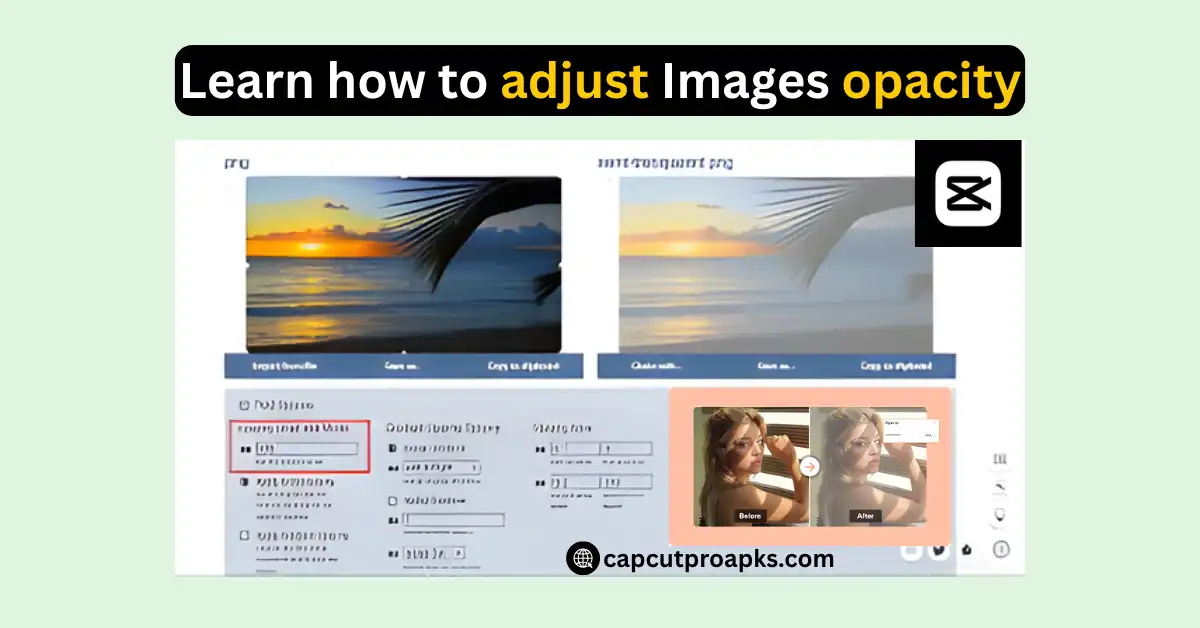
The opacity slider in CapCut is very simple. You select the image layer, go to the adjustment options, and move the slider left or right. Moving it right increases opacity, making the image solid. Moving it left reduces opacity, making it transparent. This direct control is why opacity in CapCut images feels beginner-friendly.
Most editors start around 50% opacity and then adjust based on the background. For example, a white image on a bright video may need lower opacity. A dark image on a light video may need higher opacity. There is no fixed rule here. The best part is you can preview changes instantly, which saves time.
CapCut Pro APK users enjoy smoother previews while adjusting opacity. This helps when working on detailed projects. The slider responds quickly, so you can find the perfect balance without guessing.
Opacity vs Other Image Adjustments
Opacity is often confused with filters or brightness. Filters change colors and mood. Brightness changes light levels. Opacity is the only way of determining the extent of image visibility. Once you know this difference then it is easy to edit.
For example, if text is hard to read, lowering background opacity works better than changing colors. This simple trick is widely used by experienced CapCut Pro editors. Knowing when to use opacity instead of other tools is a skill that improves your overall editing quality.
Step-by-Step Guide to Change Opacity In CapCut Images
Changing Opacity on Mobile
Changing opacity in CapCut images on mobile is very easy. First, open your project and add an image. Tap on the image layer, find the adjustment menu, and select opacity. Move the slider until the image blends well with the video. Android users, including those using CapCut Pro APK, get smooth control with instant preview.
This method works well for reels and short videos. You can quickly adjust opacity without slowing down your workflow. Many creators prefer mobile editing because it feels fast and natural.
Changing Opacity on iOS
On iOS devices, opacity works almost the same way. CapCut for iOS has a clean interface, so finding the opacity option is simple. Just tap the image layer and adjust the slider. iPhone users often notice better color accuracy, which helps when setting precise opacity levels.
If you use CapCut Pro Download on iOS, you may notice smoother transitions when combining opacity with animations. This makes your video look polished.
Changing Opacity on PC
CapCut for PC gives you more space and control. Using a mouse makes fine adjustments easier. You can drag the slider slowly and see changes clearly. Many professional editors prefer PC because large screens help judge opacity better.
CapCut for Mac users also enjoy similar controls. The experience feels stable and precise, especially for long projects.
Using Opacity In CapCut Images for Creative Effects
Image Overlay Effects
Opacity in CapCut images is perfect for overlays. You can add texture images, light leaks, or patterns and reduce opacity to create depth. This makes videos look cinematic without heavy editing.
Watermarks are another common use. By lowering opacity, you protect content without distracting viewers. The method is common among labels and artists.
Fade-In and Fade-Out Using Opacity
Opacity helps create smooth fade effects. Instead of sharp cuts, you can slowly increase or decrease opacity. This feels professional and pleasing to the eye. Many editors combine opacity with keyframes for advanced effects. Even beginners can try simple fades to improve video flow.
Advanced Opacity Features In CapCut Pro
CapCut Pro offers more smoothness and stability. When adjusting opacity, previews feel faster and cleaner. This matters when working on detailed projects.
CapCut Pro APK Download Latest Version often includes performance improvements. These updates help opacity adjustments feel natural. For creators who edit daily, these small improvements save time.
Downloading CapCut Pro is useful if you want consistent results. It supports advanced workflows without making things complicated.
Common Problems With Opacity In CapCut Images
Opacity Not Working Properly
Sometimes opacity changes don’t show clearly. This usually happens because of layer order. Make sure the image layer is above the video layer. Restarting the app or updating CapCut also fixes issues. CapCut Old Version may have limited support, so updating helps.
Image Looks Washed Out
If an image looks dull, opacity may be too low. Increase it slightly or adjust contrast. Balance is key when using opacity in CapCut images.
Best Practices for Opacity In CapCut Images
- Keep opacity between 40%–70% for overlays
- Match opacity with background colors
- Avoid extreme transparency
- Always preview before exporting
These small tips improve results quickly.
Opacity In CapCut Images for Social Media Content
The Opacity is a YouTube Shorts, Tik Tok and Instagram Reels success. It makes the text more prominent and images clean. Social platforms favor smooth visuals, and opacity supports that goal.
CapCut Versions and Opacity Support
CapCut Old Version has basic opacity tools. Newer versions offer smoother control. CapCut for Mac and PC provide stable editing experiences. Updating ensures better performance.
Expert Tips to Use Opacity Like a Pro
- Combine opacity with animations
- Use subtle changes
- Trust your eyes, not numbers
These habits improve editing quality over time.
Conclusion
Opacity in CapCut images is a simple tool with powerful results. It helps blend visuals, guide attention, and improve overall video quality. When used correctly, opacity makes edits feel calm and professional.
Learning opacity does not take much time. A few experiments are enough to understand balance. Opacity is compatible with both CapCut (mobile and PC).
In case you are interested in more control, CapCut Pro should be considered. It also has smooth previews, which are fun to edit. Frankly speaking, good editing is a matter of details and one of them is the question of opaqueness. Experiment, modify and allow your creativity to take shape.
FAQs
1. What is opacity in CapCut images?
Opacity in CapCut images controls how transparent an image looks. It helps blend images with videos smoothly.
2. Can I change opacity in CapCut for free?
Yes, basic opacity features are available in the free version of CapCut.
3. Does CapCut Pro offer better opacity control?
CapCut Pro provides smoother previews and better performance while adjusting opacity.
4. Why does my image disappear after lowering opacity?
This happens when opacity is too low. Increase it slightly to make the image visible.
5. Is opacity available in CapCut for PC and Mac?
Yes, opacity tools are available on CapCut for PC and CapCut for Mac.
6. Which opacity level is best for overlays?
A ratio of 40 per cent to 70 per cent is generally good depending on the brightness of the background.
7. Does CapCut Old Version support opacity?
Yes, but newer versions offer smoother and more stable opacity controls.